• My Feed
  • Home
  • What's Important
  • Media & Entertainment
Search

Stay Curious. Stay Wanture.

© 2026 Wanture. All rights reserved.

  • Terms of Use
  • Privacy Policy
banner
Tech/Gadgets

Samsung Galaxy S26 Ultra launches Anti‑Spy mode

26 February 2026

—

News

Carter Brooks

Samsung unveiled the Galaxy S26, S26+, and S26 Ultra, introducing a screen-masking Anti-Spy mode that stops bystanders from reading the screen. The launch answers growing privacy worries as smartphones run more sensitive AI workloads.
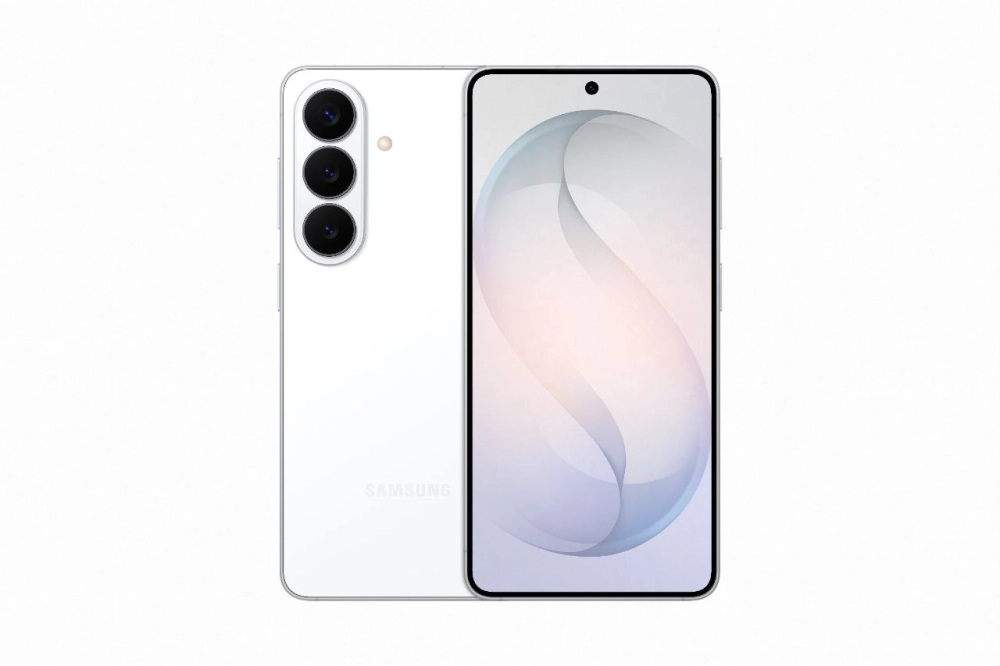
What's new: Privacy Display Anti-Spy mode arrives first on the S26 Ultra

Anti-Spy mode is a screen-masking feature that narrows the viewing cone so only someone directly in front of the phone can see the display. S26 Ultra owners can turn it on to hide the whole screen or just sensitive notifications and password entry fields from side angles. The technology makes the display unreadable to anyone not looking straight at the device—useful for travelers in airport lounges or commuters during crowded subway rides.

By the numbers: Full Galaxy S26, S26+, and S26 Ultra specifications

All three models ship with One UI 8.5 on Android 16. The base S26 and S26+ use a 10-core Exynos 2600 built on a 2-nm process, which shrinks transistors to boost speed and cut power consumption. The Ultra steps up to Snapdragon 8 Elite Gen 5, delivering higher graphics throughput for gaming and video editing.

Storage and memory: The S26 offers 12 GB RAM with 128/256/512 GB storage options. The S26+ starts at 256 GB (also 512 GB available), while the Ultra ranges from 256 GB to 1 TB, all with 12 GB RAM.

Display: The S26 features a 6.3-inch FHD+ Dynamic AMOLED 2X screen, the S26+ steps up to 6.7 inches at QHD+, and the Ultra delivers 6.9 inches at QHD+. All three support adaptive 1–120 Hz refresh rates.

Cameras: The S26 and S26+ share a triple-camera system with 50 MP wide, 12 MP ultrawide, and 10 MP 3× telephoto lenses plus a 12 MP selfie camera. The Ultra upgrades to a quad-camera array: 200 MP wide, 50 MP ultrawide, 50 MP 5× telephoto, and 10 MP 3× telephoto, plus the same 12 MP front camera.

Battery: The S26 packs 4,300 mAh, the S26+ holds 4,900 mAh, and the Ultra features 5,000 mAh. All models support fast charging, wireless charging, and reverse wireless charging.

Colors include violet, white, black, and light blue across all models.

Galaxy AI expands with on-device Gemini and Perplexity integration

Galaxy AI now runs Gemini and Perplexity models locally, enabling faster answers and reduced data transmission. Users can edit photos or transcribe voice recordings without relying on cloud servers, which conserves bandwidth and extends battery life during AI-heavy tasks. On-device processing keeps personal data on the phone rather than sending it to remote servers.

What to watch: U.S. carrier offers and regional availability

Exynos 2600 powers the S26 and S26+ in most markets, while the Ultra ships with Snapdragon 8 Elite Gen 5 in the United States and select regions. Major U.S. carriers—including Verizon, AT&T, and T-Mobile—typically offer trade-in credits and promotional discounts for flagship smartphone launches.

Consumers should compare carrier bundles and Samsung's direct trade-in program to find the best value. The new privacy screen and on-device AI position Samsung to attract power users who prioritize data security and performance over cloud-dependent alternatives.

What is this about?

  • flagship smartphone/
  • on-device AI/
  • Gemini AI/
  • Android 16/
  • Snapdragon processor/
  • Privacy Screen

Feed

    Perplexity’s AI platform uses Opus 4.6 and ChatGPT 5.2

    Perplexity Computer’s autonomous AI platform lets users input a single objective, then fragments it into sub‑tasks handled by agents such as Opus 4.6 for reasoning, Gemini for spawning sub‑agents, ChatGPT 5.2 for context, Grok for quick queries and Veo 3.1 for media creation. Forrester estimates nine saved hours per month per user.

    Perplexity’s AI platform uses Opus 4.6 and ChatGPT 5.2
    about 7 hours ago
    The Hidden Metabolic Threat in Normal‑Weight Adults

    The Hidden Metabolic Threat in Normal‑Weight Adults

    How BMI misses insulin resistance and what simple measures reveal hidden risk

    about 7 hours ago
    AI Assistants Are Redefining U.S. Offices: Act Now

    AI Assistants Are Redefining U.S. Offices: Act Now

    AI assistants boost productivity, expose privacy gaps, and guide U.S. firms

    about 7 hours ago
    Low‑Grade Inflammation: How It Harms You and Simple Fixes

    Low‑Grade Inflammation: How It Harms You and Simple Fixes

    How chronic inflammation damages heart, diabetes and memory, and habits cut it

    about 8 hours ago
    Can the Shingrix Vaccine Lower Your Dementia Risk?

    Can the Shingrix Vaccine Lower Your Dementia Risk?

    Shingrix's AS01B adjuvant is linked to a 17% lower dementia risk for adults 50+

    about 8 hours ago

    Testosterone Is Falling: What You Can Actually Do

    Learn how diet, activity, and toxins fuel the testosterone dip and drug‑free fixes

    15 February 2026

    Gen Z's Shift Away from Alcohol

    How biohacking and non-alcoholic drinks are reshaping Gen Z drinking

    15 February 2026

    San Francisco’s 24% Startup Surge Faces Tax and Lab Hurdles

    San Francisco’s venture ecosystem grew 24% in 2022-26 while other U.S. hubs shrank, buoyed by 650 billion dollars in AI-related capital expenditures. A proposed 800% jump in gross-receipts tax and new discretionary lab-permitting rules threaten to erode that advantage, potentially pushing startups to cheaper neighboring cities and weakening the Bay Area’s AI job pipeline.

    15 February 2026
    Longevity Supplements: What Science Really Says

    Longevity Supplements: What Science Really Says

    A fact‑check guide to market hype, real research, and what extends healthspan

    14 February 2026
    Testosterone Therapy Explained: Need vs. Trend

    Testosterone Therapy Explained: Need vs. Trend

    A guide to hypogonadism diagnosis, benefits, risks, and DIY hormone pitfalls

    14 February 2026
    Biohacking Basics: Proven Practices and Hidden Pitfalls

    Biohacking Basics: Proven Practices and Hidden Pitfalls

    Data‑backed hacks for sleep, metabolism, and focus, and the risky trends to skip

    14 February 2026
    What Your Sleep Tracker Really Measures (and Misses)?

    What Your Sleep Tracker Really Measures (and Misses)?

    Why Oura Ring Gen3, Apple Watch Series 8, and Fitbit Sense 2 misread your sleep

    14 February 2026
    Why One‑Size Diets Fail and How to Personalize Weight Loss

    Why One‑Size Diets Fail and How to Personalize Weight Loss

    Discover how metabolism, sleep, stress and gut microbes drive weight loss

    14 February 2026
    Deepfakes Hijack Money: The Rise of Synthetic Fraud

    Deepfakes Hijack Money: The Rise of Synthetic Fraud

    Why AI video and voice scams slip past email checks, and how to spot fakes fast

    14 February 2026
    7 Steps to Master Data Protection Compliance

    7 Steps to Master Data Protection Compliance

    14 February 2026
    When AI Hallucinates: The Legal Fallout of Fake Citations

    When AI Hallucinates: The Legal Fallout of Fake Citations

    Why GPT‑4 and ChatGPT fabricate court cases, and how to curb the risk

    14 February 2026
    Why Sitting All Day Sabotages Your Metabolism

    Why Sitting All Day Sabotages Your Metabolism

    Prolonged sitting spikes sugar and heart risk—simple moves can reverse it

    13 February 2026
    Escaping Pseudo‑Productivity: Reclaiming Deep Work

    Escaping Pseudo‑Productivity: Reclaiming Deep Work

    How nonstop tool switching taxes your brain; focus blocks boost real output

    13 February 2026
    Why Your Brain Burns Out After Video Calls?

    Why Your Brain Burns Out After Video Calls?

    Task‑switching spikes cortisol and drains focus; short breaks can reset brain

    13 February 2026
    Loading...
Tech/Gadgets

Samsung Galaxy S26 Ultra launches Anti‑Spy mode

26 February 2026

—

News

Carter Brooks

Samsung unveiled the Galaxy S26, S26+, and S26 Ultra, introducing a screen-masking Anti-Spy mode that stops bystanders from reading the screen. The launch answers growing privacy worries as smartphones run more sensitive AI workloads.

What's new: Privacy Display Anti-Spy mode arrives first on the S26 Ultra

Anti-Spy mode is a screen-masking feature that narrows the viewing cone so only someone directly in front of the phone can see the display. S26 Ultra owners can turn it on to hide the whole screen or just sensitive notifications and password entry fields from side angles. The technology makes the display unreadable to anyone not looking straight at the device—useful for travelers in airport lounges or commuters during crowded subway rides.

By the numbers: Full Galaxy S26, S26+, and S26 Ultra specifications

All three models ship with One UI 8.5 on Android 16. The base S26 and S26+ use a 10-core Exynos 2600 built on a 2-nm process, which shrinks transistors to boost speed and cut power consumption. The Ultra steps up to Snapdragon 8 Elite Gen 5, delivering higher graphics throughput for gaming and video editing.

Storage and memory: The S26 offers 12 GB RAM with 128/256/512 GB storage options. The S26+ starts at 256 GB (also 512 GB available), while the Ultra ranges from 256 GB to 1 TB, all with 12 GB RAM.

Display: The S26 features a 6.3-inch FHD+ Dynamic AMOLED 2X screen, the S26+ steps up to 6.7 inches at QHD+, and the Ultra delivers 6.9 inches at QHD+. All three support adaptive 1–120 Hz refresh rates.

Cameras: The S26 and S26+ share a triple-camera system with 50 MP wide, 12 MP ultrawide, and 10 MP 3× telephoto lenses plus a 12 MP selfie camera. The Ultra upgrades to a quad-camera array: 200 MP wide, 50 MP ultrawide, 50 MP 5× telephoto, and 10 MP 3× telephoto, plus the same 12 MP front camera.

Battery: The S26 packs 4,300 mAh, the S26+ holds 4,900 mAh, and the Ultra features 5,000 mAh. All models support fast charging, wireless charging, and reverse wireless charging.

Colors include violet, white, black, and light blue across all models.

Galaxy AI expands with on-device Gemini and Perplexity integration

Galaxy AI now runs Gemini and Perplexity models locally, enabling faster answers and reduced data transmission. Users can edit photos or transcribe voice recordings without relying on cloud servers, which conserves bandwidth and extends battery life during AI-heavy tasks. On-device processing keeps personal data on the phone rather than sending it to remote servers.

What to watch: U.S. carrier offers and regional availability

Exynos 2600 powers the S26 and S26+ in most markets, while the Ultra ships with Snapdragon 8 Elite Gen 5 in the United States and select regions. Major U.S. carriers—including Verizon, AT&T, and T-Mobile—typically offer trade-in credits and promotional discounts for flagship smartphone launches.

Consumers should compare carrier bundles and Samsung's direct trade-in program to find the best value. The new privacy screen and on-device AI position Samsung to attract power users who prioritize data security and performance over cloud-dependent alternatives.

banner

What is this about?

  • flagship smartphone/
  • on-device AI/
  • Gemini AI/
  • Android 16/
  • Snapdragon processor/
  • Privacy Screen

Feed

    Perplexity’s AI platform uses Opus 4.6 and ChatGPT 5.2

    Perplexity Computer’s autonomous AI platform lets users input a single objective, then fragments it into sub‑tasks handled by agents such as Opus 4.6 for reasoning, Gemini for spawning sub‑agents, ChatGPT 5.2 for context, Grok for quick queries and Veo 3.1 for media creation. Forrester estimates nine saved hours per month per user.

    Perplexity’s AI platform uses Opus 4.6 and ChatGPT 5.2
    about 7 hours ago
    The Hidden Metabolic Threat in Normal‑Weight Adults

    The Hidden Metabolic Threat in Normal‑Weight Adults

    How BMI misses insulin resistance and what simple measures reveal hidden risk

    about 7 hours ago
    AI Assistants Are Redefining U.S. Offices: Act Now

    AI Assistants Are Redefining U.S. Offices: Act Now

    AI assistants boost productivity, expose privacy gaps, and guide U.S. firms

    about 7 hours ago
    Low‑Grade Inflammation: How It Harms You and Simple Fixes

    Low‑Grade Inflammation: How It Harms You and Simple Fixes

    How chronic inflammation damages heart, diabetes and memory, and habits cut it

    about 8 hours ago
    Can the Shingrix Vaccine Lower Your Dementia Risk?

    Can the Shingrix Vaccine Lower Your Dementia Risk?

    Shingrix's AS01B adjuvant is linked to a 17% lower dementia risk for adults 50+

    about 8 hours ago

    Testosterone Is Falling: What You Can Actually Do

    Learn how diet, activity, and toxins fuel the testosterone dip and drug‑free fixes

    15 February 2026

    Gen Z's Shift Away from Alcohol

    How biohacking and non-alcoholic drinks are reshaping Gen Z drinking

    15 February 2026

    San Francisco’s 24% Startup Surge Faces Tax and Lab Hurdles

    San Francisco’s venture ecosystem grew 24% in 2022-26 while other U.S. hubs shrank, buoyed by 650 billion dollars in AI-related capital expenditures. A proposed 800% jump in gross-receipts tax and new discretionary lab-permitting rules threaten to erode that advantage, potentially pushing startups to cheaper neighboring cities and weakening the Bay Area’s AI job pipeline.

    15 February 2026
    Longevity Supplements: What Science Really Says

    Longevity Supplements: What Science Really Says

    A fact‑check guide to market hype, real research, and what extends healthspan

    14 February 2026
    Testosterone Therapy Explained: Need vs. Trend

    Testosterone Therapy Explained: Need vs. Trend

    A guide to hypogonadism diagnosis, benefits, risks, and DIY hormone pitfalls

    14 February 2026
    Biohacking Basics: Proven Practices and Hidden Pitfalls

    Biohacking Basics: Proven Practices and Hidden Pitfalls

    Data‑backed hacks for sleep, metabolism, and focus, and the risky trends to skip

    14 February 2026
    What Your Sleep Tracker Really Measures (and Misses)?

    What Your Sleep Tracker Really Measures (and Misses)?

    Why Oura Ring Gen3, Apple Watch Series 8, and Fitbit Sense 2 misread your sleep

    14 February 2026
    Why One‑Size Diets Fail and How to Personalize Weight Loss

    Why One‑Size Diets Fail and How to Personalize Weight Loss

    Discover how metabolism, sleep, stress and gut microbes drive weight loss

    14 February 2026
    Deepfakes Hijack Money: The Rise of Synthetic Fraud

    Deepfakes Hijack Money: The Rise of Synthetic Fraud

    Why AI video and voice scams slip past email checks, and how to spot fakes fast

    14 February 2026
    7 Steps to Master Data Protection Compliance

    7 Steps to Master Data Protection Compliance

    14 February 2026
    When AI Hallucinates: The Legal Fallout of Fake Citations

    When AI Hallucinates: The Legal Fallout of Fake Citations

    Why GPT‑4 and ChatGPT fabricate court cases, and how to curb the risk

    14 February 2026
    Why Sitting All Day Sabotages Your Metabolism

    Why Sitting All Day Sabotages Your Metabolism

    Prolonged sitting spikes sugar and heart risk—simple moves can reverse it

    13 February 2026
    Escaping Pseudo‑Productivity: Reclaiming Deep Work

    Escaping Pseudo‑Productivity: Reclaiming Deep Work

    How nonstop tool switching taxes your brain; focus blocks boost real output

    13 February 2026
    Why Your Brain Burns Out After Video Calls?

    Why Your Brain Burns Out After Video Calls?

    Task‑switching spikes cortisol and drains focus; short breaks can reset brain

    13 February 2026
    Loading...