• My Feed
  • Home
  • What's Important
  • Media & Entertainment
Search

Stay Curious. Stay Wanture.

© 2026 Wanture. All rights reserved.

  • Terms of Use
  • Privacy Policy
Health/Mental
What Toxic Productivity Does to Your Nervous System

Why achievement becomes compulsion, how chronic stress rewires your brain, and what actually breaks the cycle

11 February 2026

—

Explainer

Caleb Brooks
banner

Toxic productivity isn't about working hard—it's when rest triggers the same anxiety as failure. This explainer breaks down the physiological mechanism: how sustained cortisol depletes dopamine, why your heart rate variability drops under chronic stress, and how busyness becomes emotional armor against feeling ordinary. Includes measurable early warning signs and four interventions that restructure how your brain assigns value.

image (1)

Summary:

  • Toxic productivity hijacks your nervous system—chronic cortisol depletes dopamine, flattens reward response, and drops heart rate variability from healthy ~50ms to crisis levels around 32ms, predicting long-term cardiac and mortality risk.
  • The pattern isn't about work volume—it's busyness as a shield from feeling ordinary, wired in childhood when love felt conditional on achievement, creating a compulsion where rest triggers the same anxiety as failure.
  • Breaking the cycle requires strategic rest blocks scheduled like medical appointments, limiting daily priorities to three outcomes, separating identity from output, and choosing depth over volume—tracked through HRV data, not willpower.

Most people think productivity is about getting more done. Real productivity creates capacity. Toxic productivity burns it down. The difference shows up in your nervous system when you finally stop working.

Toxic productivity is the point where achievement becomes a compulsion and rest triggers the same anxiety as failure. Your calendar stays full, your to-do list never shrinks, and somewhere along the way, being busy stopped being a means to an end. It became how you prove you deserve to exist.

What Your Body Does When Productivity Turns Toxic

The body's response to toxic productivity looks like controlled drowning. Your adrenal glands release cortisol with every deadline, every notification, every gap in your schedule that feels like wasted time. In healthy doses, cortisol sharpens focus. In chronic doses, it rewires your reward system.

Here's the mechanism: Sustained cortisol elevation depletes dopamine production in the ventral tegmental area of your brain. Dopamine isn't just about pleasure—it's your brain's fuel for drive and satisfaction. When it drops, activities that used to feel rewarding become flat. A completed project brings no joy. A weekend off feels empty rather than restorative.

The physical markers are measurable. Heart rate variability—the variation in time between heartbeats—reflects how well your autonomic nervous system toggles between stress and recovery. Combined data from multiple studies shows healthy adults average around 50 milliseconds for SDNN (standard deviation of heartbeat intervals) and 42 milliseconds for RMSSD (a measure of vagal activity). Values vary widely across populations.

Under chronic stress, these numbers drop. A 2022 study in Scientific Reports found that perceived chronic stress negatively associates with resting-state HRV, particularly in vagal indices. Your body stops toggling between "rest and digest" and "fight or flight." It parks in fight or flight and forgets the way back.

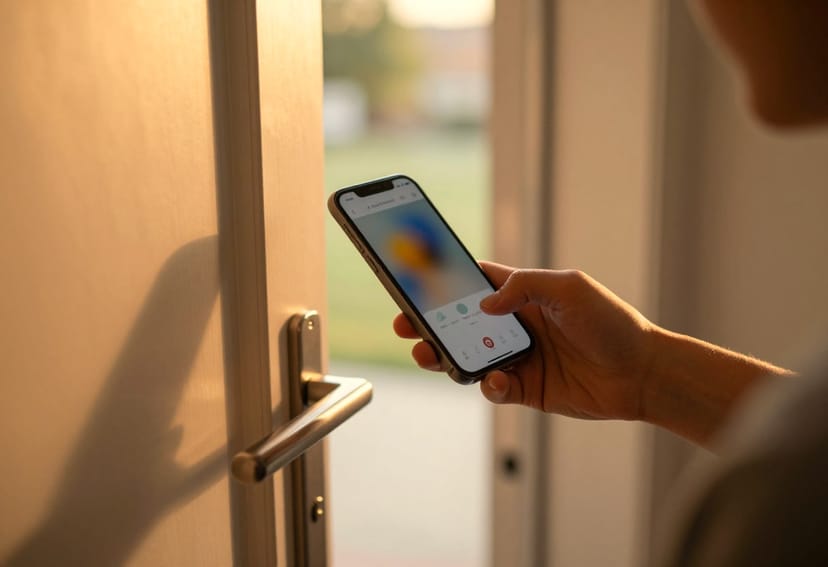
A 34-year-old software engineer in Austin tracked her HRV through her Apple Watch. Over six months of 70-hour weeks, her scores dropped from 55 milliseconds to 32. She noticed the change before she felt the burnout—her body announced the problem in data.

The measurement matters because HRV isn't just about feeling stressed. It predicts long-term health. Large U.S. cohort studies from ARIC and Framingham show that consistently low HRV predicts higher risk of coronary heart disease, sudden cardiac death, hypertension, and all-cause mortality. Declining HRV over time strengthens these associations.

Sleep architecture fractures. You might fall asleep from exhaustion, but you spend less time in REM and deep sleep stages where memory consolidation and cellular repair happen. Your Fitbit or Oura ring will show it: fragmented sleep cycles, elevated resting heart rate, body temperature that doesn't drop properly at night.

One caveat: If you're tracking HRV with a wearable, context matters. Recording duration, signal type (ECG versus optical sensors), posture, breathing rate, time of day, recent activity, caffeine, medications, age, and sex all significantly affect values. Use your own baseline as the reference point, not a universal threshold.

When Busyness Becomes a Mental Shield

Toxic productivity isn't really about work. It's about what you're not feeling while you work. Busyness creates a mental shield from anxiety, inadequacy, and the uncomfortable question: "If I'm not producing something, what makes me valuable?"

Many people locked in toxic productivity patterns grew up in environments where love felt conditional—tied to grades, performance, being "the responsible one." The child's brain learns: Affection follows achievement. Rest invites abandonment. That wiring doesn't automatically update in adulthood.

The fear underneath isn't about being lazy. It's about being ordinary. Unremarkable. Forgettable. So you stack your calendar like a barricade against invisibility. You answer emails at 11 PM to prove you're indispensable. You volunteer for the extra project because saying no feels like admitting you're not as capable as you claimed.

The cruel paradox: The more you work to create stability, the less stable you feel. Productivity-as-identity is a system with no win condition. There's always another milestone, another competitor, another version of yourself that's doing more.

The Early Warning System Your Body Is Already Sending

Toxic productivity announces itself before it becomes a crisis, but the signs often get misread as character flaws rather than stress responses. Here's what to track:

Inability to rest without anxiety. You sit down to watch a show and your chest tightens. Not because you forgot something—because you're not actively producing. The discomfort shows up within 10 to 15 minutes of stopping work.

Multitasking as default mode. You're on a Zoom call while drafting an email while mentally planning tomorrow's presentation. Your attention never fully lands on one thing. This isn't efficiency—it's your brain avoiding the vulnerability of single-pointed focus.

Achievement devaluation. You finish a major project and feel nothing. Or you feel relief for about 20 minutes before your brain surfaces the next inadequacy. The goalpost moves before you reach it, every time.

Inability to switch off on vacation. You've planned this trip for months. You're sitting on a beach. And you're mentally drafting Monday's agenda or feeling guilty about colleagues covering your workload. Even your rest state includes a work backup plan.

Physical irritability that feels unprovoked. Your partner asks a simple question and you snap. Your kid needs help with homework and you feel rage before you feel love. That's not a personality flaw—that's a nervous system running on fumes, interpreting every demand as a threat.

What Actually Interrupts the Cycle

The research on breaking toxic productivity patterns points to four interventions that work—not because they're relaxing, but because they restructure how your brain assigns value.

Strategic Rest, Scheduled Like a Medical Appointment

This isn't "try to relax more." It's blocking 90-minute windows on your calendar labeled "non-negotiable recovery" and defending them the way you'd defend a client meeting. During that time, you do something that requires zero output: walk without a destination, sit in a park, listen to music without also cleaning the kitchen.

The goal is to teach your nervous system that existence without production doesn't lead to catastrophe. Start with three sessions per week. Track your HRV or resting heart rate before and after two weeks. The data often provides permission your emotions won't: Rest is physiologically productive.

Priority Limitation Using the "Rule of Three"

Each day, identify three outcomes that matter. Not tasks—outcomes. Everything else is either delegated, delayed, or deleted. This isn't about doing less; it's about doing fewer things deeply instead of many things poorly. Your brain's prefrontal cortex can only hold about three complex goals in working memory anyway. Anything beyond that fragments your attention and spikes cortisol.

Identity Separation Exercises

Write two lists. First: "Things I've accomplished." Second: "Things that make me who I am." If the lists are identical, your identity is fused with your output. The practice is to deliberately invest time in the second list—relationships, values, experiences that exist independent of achievement.

This might mean having dinner with a friend and committing to not mentioning work. It might mean joining a recreational sports league where your skill level doesn't matter. The point is to prove to your nervous system that you exist outside of what you produce.

Systemic constraints matter here. If your workplace punishes boundaries, if your financial situation leaves no room for reduced hours, if caregiving responsibilities fall entirely on you—these strategies require adaptation. A Seattle emergency room nurse whose resting heart rate climbed from 62 to 78 bpm during a staffing crisis couldn't simply schedule rest blocks. She started with five-minute breathing exercises between shifts and used her union to advocate for safer staffing ratios. Individual change works best when paired with collective advocacy.

Depth Over Volume as a Daily Metric

At the end of each day, ask: "Did I go deep on anything today, or did I skim across surfaces?" One hour of focused, undistracted work on a meaningful problem does more for your sense of competence—and your actual output—than four hours of multitasking. Flow states, where you lose track of time, are neurologically restorative in ways that fragmented busyness never is.

Where the Pattern Starts to Shift

Toxic productivity loses its grip the moment you notice it without judgment. Not when you fix it—when you see it. When you catch yourself checking email at a stoplight and recognize it as anxiety rather than efficiency. When you feel guilt about resting and name it as a learned response, not a moral truth.

That awareness creates the first opening. From there, the work is gradual: one scheduled rest period. One conversation where you admit you're overwhelmed. One priority list that stops at three.

Progress doesn't look like suddenly being calm. It looks like your nervous system remembering, slowly, that you are not what you produce. You're the person experiencing the production. And that person needs to still be functional when the project ends.

What is this about?

  • Explainer/
  • Caleb Brooks/
  • Health/
  • Mental

Feed

    iPhone 18 Pro to Launch iOS 27 Camera with f/1.5‑f/2.8 Aperture

    iOS 27 adds a “Siri” visual‑AI mode as Apple readies iPhone 18 Pro for fall

    Carter Brooks3 days ago

    Therapist vs Counselor: Which Fits Your Needs?

    Licenses, Training Hours, and Treatment Options Compared (2024‑2025 Data)

    Caleb Brooks3 days ago

    Ask YouTube Launches March 15, 2026 for Premium Users

    On March 15, 2026, YouTube introduced Ask YouTube, an AI‑driven chat that lets U.S. Premium subscribers ask questions and receive synthesized video‑based answers. The tool promises a conversational search experience, yet early tests revealed factual slips, such as a wrong claim about the Steam controller’s joysticks, highlighting the need for users to verify information before acting.

    Ask YouTube Launches March 15, 2026 for Premium Users
    Carter Brooks5 days ago

    Samsung unveils Galaxy Z Fold 8 Wide with magnets

    Leaked images released by insider Sonny Dixon reveal Samsung’s upcoming Galaxy Z Fold 8 lineup, including a new Z Fold 8 Wide with integrated chassis magnets and a simplified two-camera rear array. The wide model aims to lower costs while keeping tablet-size screens, targeting buyers priced out of premium foldables ahead of an August 2026 launch.

    Samsung unveils Galaxy Z Fold 8 Wide with magnets
    Carter Brooks5 days ago

    Samsung launches Jinju smart glasses in 2026

    Samsung’s first smart glasses, code‑named Jinju, debut in 2026 as a voice‑assistant and photo‑capture device. They use a Qualcomm Snapdragon AR1 chip, Sony IMX681 12MP camera, 155 mAh battery, and bone‑conduction speakers, with no display. The battery lasts a few hours; sustained tasks may throttle. Samsung will unveil Jinju in 2026, targeting the Russian market where Meta glasses are unavailable.

    Samsung launches Jinju smart glasses in 2026
    Priya Desai5 days ago

    Sony Adds 30‑Day Online Checks for PlayStation 4 & PS5

    Starting April 2026, Sony’s PlayStation 4 and PS5 will require each digital title purchased after March 2026 to verify its license with Sony’s servers at least once every 30 days. Missing the online ping renders the game unplayable until the console reconnects, while disc copies and pre‑March downloads remain unaffected. Users should plan a monthly check to keep libraries active.

    Sony Adds 30‑Day Online Checks for PlayStation 4 & PS5
    Carter Brooks5 days ago

    Boost Your Healthspan: 1‑MET Gains Cut Mortality by 11–17%

    Why a 5–7 MET boost (16–25 ml·kg⁻¹·min⁻¹) narrows smoker‑level death risk

    Sarah Lindgren5 days ago

    Geely unveils 196‑billion‑parameter EVA Cab L4 robotaxi

    At Auto China 2026, Geely, AFARI and CaoCao introduced the EVA Cab, a purpose‑built L4 robotaxi with a 196‑billion‑parameter AI stack and a 1,400 TOPS compute platform. The 43‑sensor suite, featuring a 2,160‑line LiDAR with 600 m range, claims 99% scenario coverage and aims for series production in late 2027, while U.S. entry remains uncertain.

    Geely unveils 196‑billion‑parameter EVA Cab L4 robotaxi
    Ethan Whitaker6 days ago

    MediaTek launches Dimensity 7450X for mid‑range foldables

    MediaTek unveiled the Dimensity 7450 and 7450X on April 27, 2026, for mid‑range phones. They feature an octa‑core CPU (Cortex‑A78 up to 2.6 GHz + Cortex‑A55), Mali‑G615 MC2 GPU, sixth‑gen NPU with 7 % AI gain, and an Imagiq 950 ISP supporting up to 200 MP cameras. The 7450X adds dual‑display optimization and flagship‑class camera and AI capabilities, debuting in Motorola’s Razr 70 on April 29, 2026.

    MediaTek launches Dimensity 7450X for mid‑range foldables
    Priya Desai6 days ago

    Cat Gatekeeper Chrome Extension Launches on April 27, 2026

    Cat Gatekeeper, a free Chrome extension released on April 27, 2026, overlays a cartoon cat on selected sites—Facebook, X, Reddit, YouTube, Threads, and Bluesky—once a user‑set timer expires. The tab remains blocked until the user resets it. Developer @konekone2026 describes it as a light‑hearted productivity cue that avoids shame‑based blocking. A Firefox version is planned.

    Cat Gatekeeper Chrome Extension Launches on April 27, 2026
    Carter Brooks6 days ago
    Loading...
Health/Mental

What Toxic Productivity Does to Your Nervous System

Why achievement becomes compulsion, how chronic stress rewires your brain, and what actually breaks the cycle

February 11, 2026, 1:17 pm

Toxic productivity isn't about working hard—it's when rest triggers the same anxiety as failure. This explainer breaks down the physiological mechanism: how sustained cortisol depletes dopamine, why your heart rate variability drops under chronic stress, and how busyness becomes emotional armor against feeling ordinary. Includes measurable early warning signs and four interventions that restructure how your brain assigns value.

image (1)

Summary

  • Toxic productivity hijacks your nervous system—chronic cortisol depletes dopamine, flattens reward response, and drops heart rate variability from healthy ~50ms to crisis levels around 32ms, predicting long-term cardiac and mortality risk.
  • The pattern isn't about work volume—it's busyness as a shield from feeling ordinary, wired in childhood when love felt conditional on achievement, creating a compulsion where rest triggers the same anxiety as failure.
  • Breaking the cycle requires strategic rest blocks scheduled like medical appointments, limiting daily priorities to three outcomes, separating identity from output, and choosing depth over volume—tracked through HRV data, not willpower.

Most people think productivity is about getting more done. Real productivity creates capacity. Toxic productivity burns it down. The difference shows up in your nervous system when you finally stop working.

Toxic productivity is the point where achievement becomes a compulsion and rest triggers the same anxiety as failure. Your calendar stays full, your to-do list never shrinks, and somewhere along the way, being busy stopped being a means to an end. It became how you prove you deserve to exist.

What Your Body Does When Productivity Turns Toxic

The body's response to toxic productivity looks like controlled drowning. Your adrenal glands release cortisol with every deadline, every notification, every gap in your schedule that feels like wasted time. In healthy doses, cortisol sharpens focus. In chronic doses, it rewires your reward system.

Here's the mechanism: Sustained cortisol elevation depletes dopamine production in the ventral tegmental area of your brain. Dopamine isn't just about pleasure—it's your brain's fuel for drive and satisfaction. When it drops, activities that used to feel rewarding become flat. A completed project brings no joy. A weekend off feels empty rather than restorative.

The physical markers are measurable. Heart rate variability—the variation in time between heartbeats—reflects how well your autonomic nervous system toggles between stress and recovery. Combined data from multiple studies shows healthy adults average around 50 milliseconds for SDNN (standard deviation of heartbeat intervals) and 42 milliseconds for RMSSD (a measure of vagal activity). Values vary widely across populations.

Under chronic stress, these numbers drop. A 2022 study in Scientific Reports found that perceived chronic stress negatively associates with resting-state HRV, particularly in vagal indices. Your body stops toggling between "rest and digest" and "fight or flight." It parks in fight or flight and forgets the way back.

A 34-year-old software engineer in Austin tracked her HRV through her Apple Watch. Over six months of 70-hour weeks, her scores dropped from 55 milliseconds to 32. She noticed the change before she felt the burnout—her body announced the problem in data.

The measurement matters because HRV isn't just about feeling stressed. It predicts long-term health. Large U.S. cohort studies from ARIC and Framingham show that consistently low HRV predicts higher risk of coronary heart disease, sudden cardiac death, hypertension, and all-cause mortality. Declining HRV over time strengthens these associations.

Sleep architecture fractures. You might fall asleep from exhaustion, but you spend less time in REM and deep sleep stages where memory consolidation and cellular repair happen. Your Fitbit or Oura ring will show it: fragmented sleep cycles, elevated resting heart rate, body temperature that doesn't drop properly at night.

One caveat: If you're tracking HRV with a wearable, context matters. Recording duration, signal type (ECG versus optical sensors), posture, breathing rate, time of day, recent activity, caffeine, medications, age, and sex all significantly affect values. Use your own baseline as the reference point, not a universal threshold.

When Busyness Becomes a Mental Shield

Toxic productivity isn't really about work. It's about what you're not feeling while you work. Busyness creates a mental shield from anxiety, inadequacy, and the uncomfortable question: "If I'm not producing something, what makes me valuable?"

Many people locked in toxic productivity patterns grew up in environments where love felt conditional—tied to grades, performance, being "the responsible one." The child's brain learns: Affection follows achievement. Rest invites abandonment. That wiring doesn't automatically update in adulthood.

The fear underneath isn't about being lazy. It's about being ordinary. Unremarkable. Forgettable. So you stack your calendar like a barricade against invisibility. You answer emails at 11 PM to prove you're indispensable. You volunteer for the extra project because saying no feels like admitting you're not as capable as you claimed.

The cruel paradox: The more you work to create stability, the less stable you feel. Productivity-as-identity is a system with no win condition. There's always another milestone, another competitor, another version of yourself that's doing more.

The Early Warning System Your Body Is Already Sending

Toxic productivity announces itself before it becomes a crisis, but the signs often get misread as character flaws rather than stress responses. Here's what to track:

Inability to rest without anxiety. You sit down to watch a show and your chest tightens. Not because you forgot something—because you're not actively producing. The discomfort shows up within 10 to 15 minutes of stopping work.

Multitasking as default mode. You're on a Zoom call while drafting an email while mentally planning tomorrow's presentation. Your attention never fully lands on one thing. This isn't efficiency—it's your brain avoiding the vulnerability of single-pointed focus.

Achievement devaluation. You finish a major project and feel nothing. Or you feel relief for about 20 minutes before your brain surfaces the next inadequacy. The goalpost moves before you reach it, every time.

Inability to switch off on vacation. You've planned this trip for months. You're sitting on a beach. And you're mentally drafting Monday's agenda or feeling guilty about colleagues covering your workload. Even your rest state includes a work backup plan.

Physical irritability that feels unprovoked. Your partner asks a simple question and you snap. Your kid needs help with homework and you feel rage before you feel love. That's not a personality flaw—that's a nervous system running on fumes, interpreting every demand as a threat.

What Actually Interrupts the Cycle

The research on breaking toxic productivity patterns points to four interventions that work—not because they're relaxing, but because they restructure how your brain assigns value.

Strategic Rest, Scheduled Like a Medical Appointment

This isn't "try to relax more." It's blocking 90-minute windows on your calendar labeled "non-negotiable recovery" and defending them the way you'd defend a client meeting. During that time, you do something that requires zero output: walk without a destination, sit in a park, listen to music without also cleaning the kitchen.

The goal is to teach your nervous system that existence without production doesn't lead to catastrophe. Start with three sessions per week. Track your HRV or resting heart rate before and after two weeks. The data often provides permission your emotions won't: Rest is physiologically productive.

Priority Limitation Using the "Rule of Three"

Each day, identify three outcomes that matter. Not tasks—outcomes. Everything else is either delegated, delayed, or deleted. This isn't about doing less; it's about doing fewer things deeply instead of many things poorly. Your brain's prefrontal cortex can only hold about three complex goals in working memory anyway. Anything beyond that fragments your attention and spikes cortisol.

Identity Separation Exercises

Write two lists. First: "Things I've accomplished." Second: "Things that make me who I am." If the lists are identical, your identity is fused with your output. The practice is to deliberately invest time in the second list—relationships, values, experiences that exist independent of achievement.

This might mean having dinner with a friend and committing to not mentioning work. It might mean joining a recreational sports league where your skill level doesn't matter. The point is to prove to your nervous system that you exist outside of what you produce.

Systemic constraints matter here. If your workplace punishes boundaries, if your financial situation leaves no room for reduced hours, if caregiving responsibilities fall entirely on you—these strategies require adaptation. A Seattle emergency room nurse whose resting heart rate climbed from 62 to 78 bpm during a staffing crisis couldn't simply schedule rest blocks. She started with five-minute breathing exercises between shifts and used her union to advocate for safer staffing ratios. Individual change works best when paired with collective advocacy.

Depth Over Volume as a Daily Metric

At the end of each day, ask: "Did I go deep on anything today, or did I skim across surfaces?" One hour of focused, undistracted work on a meaningful problem does more for your sense of competence—and your actual output—than four hours of multitasking. Flow states, where you lose track of time, are neurologically restorative in ways that fragmented busyness never is.

Where the Pattern Starts to Shift

Toxic productivity loses its grip the moment you notice it without judgment. Not when you fix it—when you see it. When you catch yourself checking email at a stoplight and recognize it as anxiety rather than efficiency. When you feel guilt about resting and name it as a learned response, not a moral truth.

That awareness creates the first opening. From there, the work is gradual: one scheduled rest period. One conversation where you admit you're overwhelmed. One priority list that stops at three.

Progress doesn't look like suddenly being calm. It looks like your nervous system remembering, slowly, that you are not what you produce. You're the person experiencing the production. And that person needs to still be functional when the project ends.
What is this about?

  • Explainer/
  • Caleb Brooks/
  • Health/
  • Mental

Feed

    iPhone 18 Pro to Launch iOS 27 Camera with f/1.5‑f/2.8 Aperture

    iOS 27 adds a “Siri” visual‑AI mode as Apple readies iPhone 18 Pro for fall

    Carter Brooks3 days ago

    Therapist vs Counselor: Which Fits Your Needs?

    Licenses, Training Hours, and Treatment Options Compared (2024‑2025 Data)

    Caleb Brooks3 days ago

    Ask YouTube Launches March 15, 2026 for Premium Users

    On March 15, 2026, YouTube introduced Ask YouTube, an AI‑driven chat that lets U.S. Premium subscribers ask questions and receive synthesized video‑based answers. The tool promises a conversational search experience, yet early tests revealed factual slips, such as a wrong claim about the Steam controller’s joysticks, highlighting the need for users to verify information before acting.

    Ask YouTube Launches March 15, 2026 for Premium Users
    Carter Brooks5 days ago

    Samsung unveils Galaxy Z Fold 8 Wide with magnets

    Leaked images released by insider Sonny Dixon reveal Samsung’s upcoming Galaxy Z Fold 8 lineup, including a new Z Fold 8 Wide with integrated chassis magnets and a simplified two-camera rear array. The wide model aims to lower costs while keeping tablet-size screens, targeting buyers priced out of premium foldables ahead of an August 2026 launch.

    Samsung unveils Galaxy Z Fold 8 Wide with magnets
    Carter Brooks5 days ago

    Samsung launches Jinju smart glasses in 2026

    Samsung’s first smart glasses, code‑named Jinju, debut in 2026 as a voice‑assistant and photo‑capture device. They use a Qualcomm Snapdragon AR1 chip, Sony IMX681 12MP camera, 155 mAh battery, and bone‑conduction speakers, with no display. The battery lasts a few hours; sustained tasks may throttle. Samsung will unveil Jinju in 2026, targeting the Russian market where Meta glasses are unavailable.

    Samsung launches Jinju smart glasses in 2026
    Priya Desai5 days ago

    Sony Adds 30‑Day Online Checks for PlayStation 4 & PS5

    Starting April 2026, Sony’s PlayStation 4 and PS5 will require each digital title purchased after March 2026 to verify its license with Sony’s servers at least once every 30 days. Missing the online ping renders the game unplayable until the console reconnects, while disc copies and pre‑March downloads remain unaffected. Users should plan a monthly check to keep libraries active.

    Sony Adds 30‑Day Online Checks for PlayStation 4 & PS5
    Carter Brooks5 days ago

    Boost Your Healthspan: 1‑MET Gains Cut Mortality by 11–17%

    Why a 5–7 MET boost (16–25 ml·kg⁻¹·min⁻¹) narrows smoker‑level death risk

    Sarah Lindgren5 days ago

    Geely unveils 196‑billion‑parameter EVA Cab L4 robotaxi

    At Auto China 2026, Geely, AFARI and CaoCao introduced the EVA Cab, a purpose‑built L4 robotaxi with a 196‑billion‑parameter AI stack and a 1,400 TOPS compute platform. The 43‑sensor suite, featuring a 2,160‑line LiDAR with 600 m range, claims 99% scenario coverage and aims for series production in late 2027, while U.S. entry remains uncertain.

    Geely unveils 196‑billion‑parameter EVA Cab L4 robotaxi
    Ethan Whitaker6 days ago

    MediaTek launches Dimensity 7450X for mid‑range foldables

    MediaTek unveiled the Dimensity 7450 and 7450X on April 27, 2026, for mid‑range phones. They feature an octa‑core CPU (Cortex‑A78 up to 2.6 GHz + Cortex‑A55), Mali‑G615 MC2 GPU, sixth‑gen NPU with 7 % AI gain, and an Imagiq 950 ISP supporting up to 200 MP cameras. The 7450X adds dual‑display optimization and flagship‑class camera and AI capabilities, debuting in Motorola’s Razr 70 on April 29, 2026.

    MediaTek launches Dimensity 7450X for mid‑range foldables
    Priya Desai6 days ago

    Cat Gatekeeper Chrome Extension Launches on April 27, 2026

    Cat Gatekeeper, a free Chrome extension released on April 27, 2026, overlays a cartoon cat on selected sites—Facebook, X, Reddit, YouTube, Threads, and Bluesky—once a user‑set timer expires. The tab remains blocked until the user resets it. Developer @konekone2026 describes it as a light‑hearted productivity cue that avoids shame‑based blocking. A Firefox version is planned.

    Cat Gatekeeper Chrome Extension Launches on April 27, 2026
    Carter Brooks6 days ago
    Loading...
banner