
Logo
Decide better.Live better.
My feedToday
Logo
Decide better.Live better.
My feedToday
Logo
My feedToday

Stay Curious. Stay Wanture.

© 2026 Wanture. All rights reserved.

  • Terms of Use
  • Privacy Policy
Logo
Decide better.Live better.
My feedTodayTechScienceHealthMobilityMindProductivityHomeExperiencesLongevity
Logo
Decide better.Live better.
My feedTodayTechScienceHealthMobilityMindProductivityHomeExperiencesLongevity
Logo
My feedTodayTechScienceHealthMobilityMindProductivityHomeExperiencesLongevity

What Are Aptamers and Why Are They Replacing Antibodies?

The DNA molecules that fold like origami, bind like Velcro, and just got supercharged by AI

What Are Aptamers and Why Are They Replacing Antibodies?

Aptamers are short DNA strands that bind targets with antibody-level precision—but they're cheaper, more stable, and easier to make. FDA-approved drugs like IZERVAY already use them. AI now designs aptamers in days instead of months, compressing discovery timelines and unlocking applications from cancer diagnostics to guided drug delivery. Here's how they work, why they outperform antibodies in key areas, and what's driving a market forecast to hit USD 13.33 billion by 2034.

11 January 2026

—

Explainer

Serena Cho
banner

Summary:

  • Aptamers are short, synthetic DNA or RNA strands that fold into 3D shapes to bind specific targets like proteins or viruses with precision, offering advantages over antibodies in cost, stability, and ease of modification.
  • AI-driven platforms like DeepAptamer and SPARK-seq accelerate aptamer discovery from months to days by predicting binding and folding, enabling single-round selection and reducing development costs.
  • The global aptamer market, valued at $3.05 billion in 2025, is projected to reach $13.33 billion by 2034, with applications in diagnostics, therapeutics like IZERVAY for blindness, and drug delivery, driven by AI and personalized medicine.

In 2023, the FDA approved IZERVAY for an untreatable form of blindness. The drug isn't a small molecule. It isn't an antibody. It's an aptamer—a short strand of DNA that folds like origami and binds to its target with precision. Most people have never heard the word. But aptamers are becoming one of the most versatile molecular tools in biotech, and artificial intelligence just handed them rocket fuel.

What Aptamers Are and How They Bind

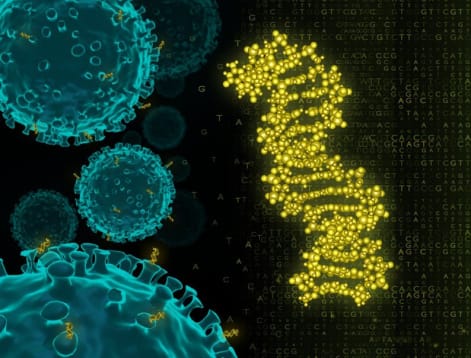
An aptamer is a short, single-stranded piece of DNA or RNA—typically 20 to 80 nucleotides long—that folds into a specific three-dimensional shape and binds tightly to a target molecule. That target can be a protein, a virus, a bacterial toxin, a cancer biomarker, even a whole cell. The binding is specific, like a key fitting one lock, and strong—often matching or exceeding the grip of an antibody.

Aptamers are chemically synthesized. No living cells required. You design the sequence. You order it from a lab. It arrives stable at room temperature. Compare that to antibodies, which require immunizing animals, harvesting cells, and maintaining cold chains from factory to clinic.

Think of aptamers as molecular Velcro, custom-designed to grab exactly what you want. Antibodies do the same job, but aptamers are cheaper, tougher, and easier to modify. They're the engineered replacement for biology's original binding toolkit.

SELEX: The Selection Process That Builds Aptamers

Aptamers are discovered through SELEX—Systematic Evolution of Ligands by EXponential enrichment. The process mirrors natural selection in a test tube.

Start with a library of random DNA or RNA sequences. We're talking 10¹⁴ to 10¹⁵ unique molecules—more combinations than stars in the observable universe. Expose this library to your target. Most sequences ignore it. A few stick.

Wash away the weak binders. Amplify the strong ones using PCR. Repeat. After 8 to 15 rounds, you're left with a handful of high-affinity winners.

The whole process used to take months of lab work. Now, AI platforms like DeepAptamer, AIoptamer, and SPARK-seq predict binding affinity and 3D folding with 85 to 95 percent accuracy in validation studies. Discovery time drops to days or weeks. Some labs now achieve single-round selection—the algorithm designs candidates so good they work on the first try.

Why Aptamers Outperform Antibodies in Key Applications

Aptamers solve several problems that have plagued antibodies for decades.

Cost and Speed

Antibody production requires animals, cell cultures, purification pipelines, and strict quality control. Aptamers are synthesized chemically, like ordering a custom DNA primer. Production time drops from months to days. Cost drops by orders of magnitude—one biotech founder reported their aptamer-based diagnostic cost one-tenth the price of the antibody equivalent.

Stability

Antibodies degrade without refrigeration. Aptamers store at room temperature for years. That eliminates cold-chain logistics—critical for point-of-care diagnostics in rural clinics or low-resource settings.

Size

Antibodies are large proteins, around 150 kilodaltons (a measure of molecular weight). Aptamers are tiny, 5 to 25 kilodaltons. Small size means better tissue penetration. A cancer-targeting aptamer can slip into a tumor where an antibody would struggle.

Modifiability

Want to attach a fluorescent tag? A chemotherapy drug? A nanoparticle? Aptamers are nucleic acids—easy to modify with standard chemistry. Antibodies require complex conjugation protocols.

Reproducibility

Every batch of chemically synthesized aptamers is identical. Antibodies, produced biologically, vary batch to batch. For diagnostics and therapeutics, consistency isn't a luxury. It's regulatory survival.

Current Diagnostic and Therapeutic Uses

Aptamers are already deployed in multiple clinical and commercial applications.

Diagnostics

Aptamers now power biosensors for cancer biomarkers like PSA for prostate cancer, infectious diseases, and environmental toxins. SomaLogic's SOMAmer platform measures thousands of proteins in a single blood sample, enabling large-scale proteomics research that would be prohibitively expensive with antibodies.

Therapeutics

IZERVAY, approved in 2023 for geographic atrophy—a leading cause of blindness—proved aptamers can clear regulatory hurdles and reach patients. Clinical trials show the drug reduces lesion growth in affected retinal tissue. Other aptamer drugs are in trials for cancer, clotting disorders, and inflammatory diseases. The therapeutic pipeline is expanding, driven by companies like Aptadel Therapeutics, Duet Biotherapeutics, and NeoVentures.

Drug Delivery

Attach a chemotherapy drug to an aptamer that binds cancer cells, and you've built a guided missile. The aptamer ferries the payload directly to diseased tissue, sparing healthy cells. Early clinical trials suggest promise for reducing side effects while maintaining efficacy.

Environmental Monitoring

Aptamers detect pesticides, heavy metals, and allergens in food and water. They're faster and cheaper than traditional lab assays, making real-time field testing practical.

Market Growth and Commercial Adoption

The global aptamer market was $3.05 billion in 2025 and is forecast to reach $13.33 billion by 2034, with a compound annual growth rate of 16.94 percent, according to IMARC Group's 2025 global market report. Alternative projections from Market Research Future estimate the market at $3.274 billion in 2024, forecasting $23.241 billion by 2035 with a CAGR of 19.5 percent. Mordor Intelligence reports more conservative figures: $2.05 billion in 2025 reaching $4.03 billion by 2030, CAGR 14.49 percent.

The U.S. aptamer market was $950.3 million in 2023 and is forecast to reach $4.23 billion by 2030, with a CAGR of 24.3 percent, per Grand View Research. Spherical Insights projects U.S. market growth from $1,156.9 million in 2024 to $11,356.8 million by 2035, CAGR 23.08 percent.

Growth drivers include rising chronic disease prevalence, demand for personalized medicine, and the search for faster, cheaper alternatives to antibodies. Asia-Pacific is expanding rapidly, with biotech R&D infrastructure investments in China, India, and South Korea.

Key players include Aptamer Group (UK), known for Optimer® binders used in diagnostics and research tools; Base Pair Biotechnologies (USA), which specializes in ultra-fast aptamer selection for biosensors; and SomaLogic, whose SOMAmer reagents power high-throughput proteomics. Startups like NeoVentures, Aptadel, and Duet Biotherapeutics are pushing next-generation therapeutics and targeted delivery platforms.

Base Pair focuses on speed—selection in days rather than weeks. SomaLogic owns the proteomics platform play. NeoVentures and Duet are betting on aptamer-drug conjugates for oncology. Each company's edge lies in its selection platform, chemical modifications, or clinical partnerships.

AI Tools Accelerating Aptamer Discovery

Artificial intelligence is compressing aptamer development timelines from months to days. Traditional SELEX required iterative rounds of lab work. Modern machine learning models predict how a sequence will fold, which structures will bind the target, and how to optimize affinity—all computationally, before synthesizing a single molecule.

Platforms like AIoptamer and SPARK-seq analyze binding data, learn structural patterns, and generate optimized candidates. DeepAptamer uses deep learning to predict aptamer-target interactions with accuracy rivaling experimental validation. In 2025 and 2026, AI-biotech funding surged past $2.5 billion, much of it flowing into aptamer design tools and generative models.

The workflow is concrete: researchers input a target protein structure, the AI trains on thousands of known aptamer-target binding datasets, outputs candidate sequences ranked by predicted affinity, and validation experiments confirm binding in the lab. Labs now screen millions of theoretical sequences computationally, synthesize only the best candidates, and achieve high-affinity binders in a fraction of the time and cost.

This isn't incremental improvement. It's a step-function change in how molecular tools are discovered.

Challenges Slowing Widespread Deployment

Oligonucleotide synthesis at industrial scale remains expensive. For diagnostics or research reagents, current manufacturing works fine. But therapeutic aptamers require kilogram-scale production, and cost curves haven't flattened as quickly as hoped. The bottleneck isn't chemistry—it's throughput and purification at volume. Companies are investing in scalable synthesis platforms, but mass production for blockbuster drugs is still a work in progress.

Regulatory pathways for new therapeutic aptamers can be lengthy. IZERVAY blazed the trail, establishing precedent for FDA approval, but each new aptamer drug must prove safety and efficacy in clinical trials. Unlike biosimilars, which follow established antibody pathways, novel aptamers often require full Phase I–III trials. That means years and hundreds of millions of dollars before reaching patients.

Antibodies still dominate certain clinical niches—particularly where decades of infrastructure, clinical experience, and insurance reimbursement favor the incumbent technology. Aptamers excel where cost, stability, or modifiability matter most. They struggle where antibody infrastructure is entrenched and "good enough" already wins.

What Comes Next for Aptamer Technology

Aptamers are moving from niche academic tool to mainstream biotech platform. The combination of chemical simplicity, AI-driven design, and proven clinical success is attracting capital, talent, and regulatory attention.

Within five to ten years, expect aptamers in everyday rapid diagnostics—home tests for flu, strep, or early cancer markers that work as easily as a pregnancy test. Personalized medicine will lean on aptamer-based proteomics to profile individual patients and tailor treatments. Pandemic preparedness will benefit from aptamer biosensors that detect novel pathogens faster than antibody-based assays.

What remains unknown: Can synthesis costs drop enough to compete with antibodies in high-volume therapeutic markets? Will regulatory agencies streamline approval pathways for aptamer therapeutics, or will each drug face full de novo review? How will aptamers perform in complex biological environments where enzymes degrade unmodified DNA and RNA?

The technology isn't flashy. It's not CRISPR or mRNA vaccines. But aptamers are becoming one of the most versatile molecular tools of the 21st century—quietly solving problems antibodies couldn't, and doing it faster and cheaper.

Topic

AI Antibody Drug Discovery

How Medical AI Predicts ICU Crises Before Symptoms Appear

22 January 2026

Illumina Maps 1 Billion CRISPR-Edited Cells in Largest Disease Atlas Ever Built

14 January 2026

Latent-X2 claims zero-shot antibody design. Does it work?

22 December 2025

What is this about?

  • Explainer/
  • Serena Cho/
  • Health/
  • Biotech/
  • therapeutic antibodies/
  • AI drug discovery/
  • biomedical innovation/
  • aptamer therapeutics/
  • molecular diagnostics/
  • synthetic biology tools

Feed

    Apple Plans 15 New Devices for Late 2026

    Apple Plans 15 New Devices for Late 2026

    Foldable iPhone Ultra and smart hub await personalized Siri launch

    Ben Ramosabout 6 hours ago
    Apple Watch Ultra 4 could track blood pressure trends

    Apple Watch Ultra 4 could track blood pressure trends

    A potential hardware redesign with 8 sensors aims to move from simple alerts to direct cardiovascular measurement

    Ben Ramos3 days ago

    Your earbuds could become a secure digital key via your heartbeat

    AccLock uses standard accelerometers to verify identity without needing premium optical heart trackers

    Ben Ramos4 days ago
    Memory chip shortages could end by 2027

    Memory chip shortages could end by 2027

    Aggressive Chinese production expansions from YMTC and CXMT may lower hardware costs sooner than the 2030 consensus

    Ben Ramos4 days ago
    Hisense Explorer X1 Pro brings 120-inch cinema to your living room

    Hisense Explorer X1 Pro brings 120-inch cinema to your living room

    A new tri-color laser engine offers 110% BT.2020 color gamut, though US availability remains unannounced

    Logan Price4 days ago
    Onyx Boox Poke 7 series brings paper-like clarity to your library

    Onyx Boox Poke 7 series brings paper-like clarity to your library

    New 300 ppi displays and 2 TB expandable storage offer a sharper, larger reading experience

    Ben Ramos4 days ago
    SpaceX IPO: A historic bet on the space economy

    SpaceX IPO: A historic bet on the space economy

    With 2025 revenue hitting $18.6 billion, the Nasdaq debut tests market appetite for Elon Musk

    Jasmine Wu4 days ago
    Figma AI agents turn manual design into high-level direction

    Figma AI agents turn manual design into high-level direction

    New intent-based tools allow designers to build layouts using natural language instead of clicking and dragging

    Evelyn Park5 days ago
    NanoClaw's sandbox stops AI agents from compromising your OS

    NanoClaw's sandbox stops AI agents from compromising your OS

    NanoCo secures $12 million to scale its isolated architecture for enterprise AI deployment

    Marcus Dillard5 days ago

    Microsoft's new Surface lineup is for businesses, not consumers

    Wait for Snapdragon X2 models this summer if you aren't buying for an enterprise fleet

    Carter Brooks5 days ago
    Loading...

What Are Aptamers and Why Are They Replacing Antibodies?

The DNA molecules that fold like origami, bind like Velcro, and just got supercharged by AI

January 11, 2026, 5:18 pm

Aptamers are short DNA strands that bind targets with antibody-level precision—but they're cheaper, more stable, and easier to make. FDA-approved drugs like IZERVAY already use them. AI now designs aptamers in days instead of months, compressing discovery timelines and unlocking applications from cancer diagnostics to guided drug delivery. Here's how they work, why they outperform antibodies in key areas, and what's driving a market forecast to hit USD 13.33 billion by 2034.

What Are Aptamers and Why Are They Replacing Antibodies?

Summary

  • Aptamers are short, synthetic DNA or RNA strands that fold into 3D shapes to bind specific targets like proteins or viruses with precision, offering advantages over antibodies in cost, stability, and ease of modification.
  • AI-driven platforms like DeepAptamer and SPARK-seq accelerate aptamer discovery from months to days by predicting binding and folding, enabling single-round selection and reducing development costs.
  • The global aptamer market, valued at $3.05 billion in 2025, is projected to reach $13.33 billion by 2034, with applications in diagnostics, therapeutics like IZERVAY for blindness, and drug delivery, driven by AI and personalized medicine.

In 2023, the FDA approved IZERVAY for an untreatable form of blindness. The drug isn't a small molecule. It isn't an antibody. It's an aptamer—a short strand of DNA that folds like origami and binds to its target with precision. Most people have never heard the word. But aptamers are becoming one of the most versatile molecular tools in biotech, and artificial intelligence just handed them rocket fuel.

What Aptamers Are and How They Bind

An aptamer is a short, single-stranded piece of DNA or RNA—typically 20 to 80 nucleotides long—that folds into a specific three-dimensional shape and binds tightly to a target molecule. That target can be a protein, a virus, a bacterial toxin, a cancer biomarker, even a whole cell. The binding is specific, like a key fitting one lock, and strong—often matching or exceeding the grip of an antibody.

Aptamers are chemically synthesized. No living cells required. You design the sequence. You order it from a lab. It arrives stable at room temperature. Compare that to antibodies, which require immunizing animals, harvesting cells, and maintaining cold chains from factory to clinic.

Think of aptamers as molecular Velcro, custom-designed to grab exactly what you want. Antibodies do the same job, but aptamers are cheaper, tougher, and easier to modify. They're the engineered replacement for biology's original binding toolkit.

SELEX: The Selection Process That Builds Aptamers

Aptamers are discovered through SELEX—Systematic Evolution of Ligands by EXponential enrichment. The process mirrors natural selection in a test tube.

Start with a library of random DNA or RNA sequences. We're talking 10¹⁴ to 10¹⁵ unique molecules—more combinations than stars in the observable universe. Expose this library to your target. Most sequences ignore it. A few stick.

Wash away the weak binders. Amplify the strong ones using PCR. Repeat. After 8 to 15 rounds, you're left with a handful of high-affinity winners.

The whole process used to take months of lab work. Now, AI platforms like DeepAptamer, AIoptamer, and SPARK-seq predict binding affinity and 3D folding with 85 to 95 percent accuracy in validation studies. Discovery time drops to days or weeks. Some labs now achieve single-round selection—the algorithm designs candidates so good they work on the first try.

Why Aptamers Outperform Antibodies in Key Applications

Aptamers solve several problems that have plagued antibodies for decades.

Cost and Speed

Antibody production requires animals, cell cultures, purification pipelines, and strict quality control. Aptamers are synthesized chemically, like ordering a custom DNA primer. Production time drops from months to days. Cost drops by orders of magnitude—one biotech founder reported their aptamer-based diagnostic cost one-tenth the price of the antibody equivalent.

Stability

Antibodies degrade without refrigeration. Aptamers store at room temperature for years. That eliminates cold-chain logistics—critical for point-of-care diagnostics in rural clinics or low-resource settings.

Size

Antibodies are large proteins, around 150 kilodaltons (a measure of molecular weight). Aptamers are tiny, 5 to 25 kilodaltons. Small size means better tissue penetration. A cancer-targeting aptamer can slip into a tumor where an antibody would struggle.

Modifiability

Want to attach a fluorescent tag? A chemotherapy drug? A nanoparticle? Aptamers are nucleic acids—easy to modify with standard chemistry. Antibodies require complex conjugation protocols.

Reproducibility

Every batch of chemically synthesized aptamers is identical. Antibodies, produced biologically, vary batch to batch. For diagnostics and therapeutics, consistency isn't a luxury. It's regulatory survival.

Current Diagnostic and Therapeutic Uses

Aptamers are already deployed in multiple clinical and commercial applications.

Diagnostics

Aptamers now power biosensors for cancer biomarkers like PSA for prostate cancer, infectious diseases, and environmental toxins. SomaLogic's SOMAmer platform measures thousands of proteins in a single blood sample, enabling large-scale proteomics research that would be prohibitively expensive with antibodies.

Therapeutics

IZERVAY, approved in 2023 for geographic atrophy—a leading cause of blindness—proved aptamers can clear regulatory hurdles and reach patients. Clinical trials show the drug reduces lesion growth in affected retinal tissue. Other aptamer drugs are in trials for cancer, clotting disorders, and inflammatory diseases. The therapeutic pipeline is expanding, driven by companies like Aptadel Therapeutics, Duet Biotherapeutics, and NeoVentures.

Drug Delivery

Attach a chemotherapy drug to an aptamer that binds cancer cells, and you've built a guided missile. The aptamer ferries the payload directly to diseased tissue, sparing healthy cells. Early clinical trials suggest promise for reducing side effects while maintaining efficacy.

Environmental Monitoring

Aptamers detect pesticides, heavy metals, and allergens in food and water. They're faster and cheaper than traditional lab assays, making real-time field testing practical.

Market Growth and Commercial Adoption

The global aptamer market was $3.05 billion in 2025 and is forecast to reach $13.33 billion by 2034, with a compound annual growth rate of 16.94 percent, according to IMARC Group's 2025 global market report. Alternative projections from Market Research Future estimate the market at $3.274 billion in 2024, forecasting $23.241 billion by 2035 with a CAGR of 19.5 percent. Mordor Intelligence reports more conservative figures: $2.05 billion in 2025 reaching $4.03 billion by 2030, CAGR 14.49 percent.

The U.S. aptamer market was $950.3 million in 2023 and is forecast to reach $4.23 billion by 2030, with a CAGR of 24.3 percent, per Grand View Research. Spherical Insights projects U.S. market growth from $1,156.9 million in 2024 to $11,356.8 million by 2035, CAGR 23.08 percent.

Growth drivers include rising chronic disease prevalence, demand for personalized medicine, and the search for faster, cheaper alternatives to antibodies. Asia-Pacific is expanding rapidly, with biotech R&D infrastructure investments in China, India, and South Korea.

Key players include Aptamer Group (UK), known for Optimer® binders used in diagnostics and research tools; Base Pair Biotechnologies (USA), which specializes in ultra-fast aptamer selection for biosensors; and SomaLogic, whose SOMAmer reagents power high-throughput proteomics. Startups like NeoVentures, Aptadel, and Duet Biotherapeutics are pushing next-generation therapeutics and targeted delivery platforms.

Base Pair focuses on speed—selection in days rather than weeks. SomaLogic owns the proteomics platform play. NeoVentures and Duet are betting on aptamer-drug conjugates for oncology. Each company's edge lies in its selection platform, chemical modifications, or clinical partnerships.

AI Tools Accelerating Aptamer Discovery

Artificial intelligence is compressing aptamer development timelines from months to days. Traditional SELEX required iterative rounds of lab work. Modern machine learning models predict how a sequence will fold, which structures will bind the target, and how to optimize affinity—all computationally, before synthesizing a single molecule.

Platforms like AIoptamer and SPARK-seq analyze binding data, learn structural patterns, and generate optimized candidates. DeepAptamer uses deep learning to predict aptamer-target interactions with accuracy rivaling experimental validation. In 2025 and 2026, AI-biotech funding surged past $2.5 billion, much of it flowing into aptamer design tools and generative models.

The workflow is concrete: researchers input a target protein structure, the AI trains on thousands of known aptamer-target binding datasets, outputs candidate sequences ranked by predicted affinity, and validation experiments confirm binding in the lab. Labs now screen millions of theoretical sequences computationally, synthesize only the best candidates, and achieve high-affinity binders in a fraction of the time and cost.

This isn't incremental improvement. It's a step-function change in how molecular tools are discovered.

Challenges Slowing Widespread Deployment

Oligonucleotide synthesis at industrial scale remains expensive. For diagnostics or research reagents, current manufacturing works fine. But therapeutic aptamers require kilogram-scale production, and cost curves haven't flattened as quickly as hoped. The bottleneck isn't chemistry—it's throughput and purification at volume. Companies are investing in scalable synthesis platforms, but mass production for blockbuster drugs is still a work in progress.

Regulatory pathways for new therapeutic aptamers can be lengthy. IZERVAY blazed the trail, establishing precedent for FDA approval, but each new aptamer drug must prove safety and efficacy in clinical trials. Unlike biosimilars, which follow established antibody pathways, novel aptamers often require full Phase I–III trials. That means years and hundreds of millions of dollars before reaching patients.

Antibodies still dominate certain clinical niches—particularly where decades of infrastructure, clinical experience, and insurance reimbursement favor the incumbent technology. Aptamers excel where cost, stability, or modifiability matter most. They struggle where antibody infrastructure is entrenched and "good enough" already wins.

What Comes Next for Aptamer Technology

Aptamers are moving from niche academic tool to mainstream biotech platform. The combination of chemical simplicity, AI-driven design, and proven clinical success is attracting capital, talent, and regulatory attention.

Within five to ten years, expect aptamers in everyday rapid diagnostics—home tests for flu, strep, or early cancer markers that work as easily as a pregnancy test. Personalized medicine will lean on aptamer-based proteomics to profile individual patients and tailor treatments. Pandemic preparedness will benefit from aptamer biosensors that detect novel pathogens faster than antibody-based assays.

What remains unknown: Can synthesis costs drop enough to compete with antibodies in high-volume therapeutic markets? Will regulatory agencies streamline approval pathways for aptamer therapeutics, or will each drug face full de novo review? How will aptamers perform in complex biological environments where enzymes degrade unmodified DNA and RNA?

The technology isn't flashy. It's not CRISPR or mRNA vaccines. But aptamers are becoming one of the most versatile molecular tools of the 21st century—quietly solving problems antibodies couldn't, and doing it faster and cheaper.
Topic

AI Antibody Drug Discovery

How Medical AI Predicts ICU Crises Before Symptoms Appear

22 January 2026

Illumina Maps 1 Billion CRISPR-Edited Cells in Largest Disease Atlas Ever Built

14 January 2026

Latent-X2 claims zero-shot antibody design. Does it work?

22 December 2025

What is this about?

  • Explainer/
  • Serena Cho/
  • Health/
  • Biotech/
  • therapeutic antibodies/
  • AI drug discovery/
  • biomedical innovation/
  • aptamer therapeutics/
  • molecular diagnostics/
  • synthetic biology tools

Feed

    Apple Plans 15 New Devices for Late 2026

    Apple Plans 15 New Devices for Late 2026

    Foldable iPhone Ultra and smart hub await personalized Siri launch

    Ben Ramosabout 6 hours ago
    Apple Watch Ultra 4 could track blood pressure trends

    Apple Watch Ultra 4 could track blood pressure trends

    A potential hardware redesign with 8 sensors aims to move from simple alerts to direct cardiovascular measurement

    Ben Ramos3 days ago

    Your earbuds could become a secure digital key via your heartbeat

    AccLock uses standard accelerometers to verify identity without needing premium optical heart trackers

    Ben Ramos4 days ago
    Memory chip shortages could end by 2027

    Memory chip shortages could end by 2027

    Aggressive Chinese production expansions from YMTC and CXMT may lower hardware costs sooner than the 2030 consensus

    Ben Ramos4 days ago
    Hisense Explorer X1 Pro brings 120-inch cinema to your living room

    Hisense Explorer X1 Pro brings 120-inch cinema to your living room

    A new tri-color laser engine offers 110% BT.2020 color gamut, though US availability remains unannounced

    Logan Price4 days ago
    Onyx Boox Poke 7 series brings paper-like clarity to your library

    Onyx Boox Poke 7 series brings paper-like clarity to your library

    New 300 ppi displays and 2 TB expandable storage offer a sharper, larger reading experience

    Ben Ramos4 days ago
    SpaceX IPO: A historic bet on the space economy

    SpaceX IPO: A historic bet on the space economy

    With 2025 revenue hitting $18.6 billion, the Nasdaq debut tests market appetite for Elon Musk

    Jasmine Wu4 days ago
    Figma AI agents turn manual design into high-level direction

    Figma AI agents turn manual design into high-level direction

    New intent-based tools allow designers to build layouts using natural language instead of clicking and dragging

    Evelyn Park5 days ago
    NanoClaw's sandbox stops AI agents from compromising your OS

    NanoClaw's sandbox stops AI agents from compromising your OS

    NanoCo secures $12 million to scale its isolated architecture for enterprise AI deployment

    Marcus Dillard5 days ago

    Microsoft's new Surface lineup is for businesses, not consumers

    Wait for Snapdragon X2 models this summer if you aren't buying for an enterprise fleet

    Carter Brooks5 days ago
    Loading...
Home
Home
Search
Search
banner