
• My Feed
  • Home
  • What's Important
  • Media & Entertainment
Search

Stay Curious. Stay Wanture.

© 2026 Wanture. All rights reserved.

  • Terms of Use
  • Privacy Policy
Tech/Business
UAE aims to automate half of its services by 2028

23 April 2026

—

News

Rachel Stein

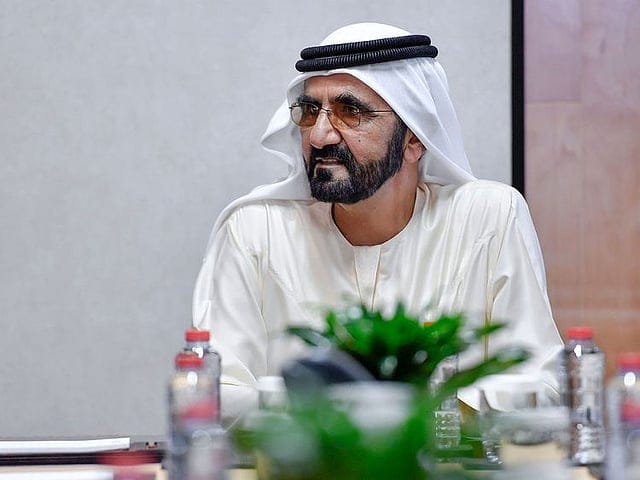
The United Arab Emirates has set a two year clock on one of the world's most ambitious public sector AI experiments. In a directive issued Thursday by President Sheikh Mohamed bin Zayed Al Nahyan, the federal government committed to transferring half of its services to autonomous AI systems, models that analyze, decide, and act without waiting for human approval. It's a bold recalibration of the state citizen contract, and it raises a question that goes beyond efficiency: What does it mean when algorithms become executive partners in governance?

The cabinet's mandate is precise. Over the next two years, more than 30 federal ministries must adopt AI agents capable of operating independently, processing requests, generating recommendations, and executing decisions in real time. Oversight falls to Vice President Sheikh Mansour bin Zayed Al Nahyan, with implementation led by a task force under Minister Mohammad Al Gergawi, the architect behind much of the UAE's digital transformation over the past decade.

To support that transition, the government has committed to training all federal employees in generative AI tools, a recognition that adopting agentic systems requires cultural readiness as much as technical readiness.

The UAE is not dabbling. It is staking a global claim as the first nation to hardwire autonomous AI into core government operations at scale. The anticipated benefits are material: faster processing, lower operational costs, and real time service optimization. The government projects up to a 25% reduction in processing time for routine requests, which could meaningfully improve citizen satisfaction and attract technology investment to the region.

But the implications extend beyond efficiency metrics. By embedding agentic AI into public administration, the UAE is testing a governance model that other nations, especially those with centralized digital infrastructure, will watch closely. If successful, it could redefine expectations around service delivery, transparency, and the role of the state in the algorithmic age.

This initiative doesn't emerge from a vacuum. It builds on more than two decades of digital reform, from early e-government portals to the UAE Pass identity system, which consolidated citizen credentials into a single digital gateway. The establishment of the world's first AI Ministry in 2017 and the launch of the UAE AI Strategy 2031 created the regulatory scaffolding for today's autonomous rollout.

What distinguishes this phase is intent. Earlier strategies focused on digitization, moving existing processes online. The current directive aims for delegation: granting machines the authority to act on behalf of the state, within defined parameters, without human intervention in every transaction.

Implementation will proceed in phases. Pilot projects are slated to begin in sectors such as health and transportation, where speed and accuracy carry direct consequences for public welfare. By mid 2028, the government expects full integration across core services, supported by continuous performance reviews to guide expansion and course correction.

During the first year, all participating ministries will undergo AI readiness evaluations, a pragmatic acknowledgment that not all agencies start from the same technical or organizational baseline. The government plans to train thousands of staff, preparing the human workforce to collaborate with, audit, and override autonomous systems when necessary.

Automation without accountability is a risky proposition. The UAE's strategy raises critical questions about responsibility, transparency, and redress. When an AI agent denies a permit, delays a service, or allocates a resource, who is responsible? How will citizens challenge decisions made by systems they cannot interrogate? What safeguards exist to prevent algorithmic bias from embedding itself into policy?

These are not hypothetical concerns. Autonomous systems inherit the assumptions embedded in their training data and design. If those assumptions reflect historical inequities or narrow definitions of need, the AI will scale them efficiently, invisibly, and at the speed of code. The UAE's commitment to human centered governance will be tested not by the speed of its systems, but by the fairness of their outcomes.

The world is watching. If the UAE succeeds in deploying autonomous AI across half its government services by 2028, it will offer a working model for other nations contemplating similar transformations. If it stumbles on technical failures, ethical missteps, or citizen resistance, it will provide equally valuable lessons about the limits of delegation.

Either way, this is more than a policy experiment. It is a test of whether governance can be both algorithmic and humane, efficient and accountable, autonomous and just. The answers won't be found in code alone. They will emerge from the choices people make about what to automate, what to preserve, and who gets to decide the difference.


Mobile Bottom Test Banner

What is this about?

  • News/
  • Rachel Stein/
  • Tech/
  • Business/
  • AI Agent Orchestration/
  • Human-Centered Innovation/
  • AI-Powered Collaboration/
  • AI misuse monitoring/
  • Government AI Automation

Feed

    Xbox Drops Microsoft Gaming Label, 2022 Rebrand Reversed

    Microsoft’s Xbox division announced in 2026 that it will retire the “Microsoft Gaming” brand introduced in 2022 and revert to the classic Xbox name. The shift signals a strategic focus on daily active users across PC, mobile, and emerging markets, backed by the upcoming Project Helix and an expanded push into China.

    Xbox Drops Microsoft Gaming Label, 2022 Rebrand Reversed
    Jordan McAllisterabout 3 hours ago

    Honor's six‑fan Win H9 cuts temps by 12.5%

    Honor unveiled the Win H9 gaming laptop in China on April 22, noting a six‑fan system that cuts temperatures 12.5% versus the older two‑fan design. The flagship ships with an RTX 5070 Ti, Intel Core Ultra 9 290HX, 32 GB RAM, 1 TB SSD, and a 300‑Hz 16:10 DCI‑P3 display. Prices begin at 18,000 yuan for the top model and 11,500 yuan for the base, with no confirmed launch outside China.

    Honor's six‑fan Win H9 cuts temps by 12.5%
    Carter Brooksabout 3 hours ago

    Open AI Models Prove Value in Samsung‑Noôdome Pilot

    At Samsung’s Innovation Campus, mathematician Arutyun Avetisyan and AI researcher Svetlana Yun presented Noôdome‑backed data showing lightweight, open‑source AI models can trim development sprints by three days and cut defect rates by about 15%. They warned that oversight and talent development are essential to avoid security and bias risks while scaling AI.

    Adrian Vegaabout 3 hours ago

    DeepSeek launches V4‑Pro, V4‑Flash 1 million‑token window

    DeepSeek unveiled V4‑Pro and V4‑Flash on April 24 with a 1 million‑token context window and open‑weight model weights. V4‑Pro runs 1.6 trillion parameters (49 billion active); V4‑Flash has 284 billion total (13 billion active). API fees are $1.74 per million input and $3.48 per million output for Pro, and $0.14 input/$0.28 output for Flash. Models are on Hugging Face for quick integration.

    DeepSeek launches V4‑Pro, V4‑Flash 1 million‑token window
    Jasmine Wuabout 5 hours ago
    Apple’s April 9 Telega App Removal Sparks Antitrust Probe

    Apple’s April 9 Telega App Removal Sparks Antitrust Probe

    Russia’s antitrust watchdog warns Apple’s removal may breach competition law

    Rachel Stein1 day ago
    Game Pass Ultimate May Get Full‑Time Discord Nitro

    Game Pass Ultimate May Get Full‑Time Discord Nitro

    Xbox and Discord hint at extended Nitro perks for subscribers

    Carter Brooks1 day ago
    OpenAI launches always‑on AI agents for Workspace

    OpenAI launches always‑on AI agents for Workspace

    Agents replace Custom GPTs, running continuously to automate business workflows

    Jasmine Wu1 day ago
    Meta Starts Recording U.S. Staff Screens to Train AI

    Meta Starts Recording U.S. Staff Screens to Train AI

    Meta logs employee screenshots as it plans a 10% staff cut

    Rachel Stein1 day ago
    Razer launches Atlas Pro glass pad at 1.9 mm thickness

    Razer launches Atlas Pro glass pad at 1.9 mm thickness

    It claims the title of the world’s thinnest glass mouse pad

    Carter Brooks1 day ago
    Loading...
Tech/Business

UAE aims to automate half of its services by 2028

23 April 2026

—

News

Rachel Stein

The United Arab Emirates has set a two year clock on one of the world's most ambitious public sector AI experiments. In a directive issued Thursday by President Sheikh Mohamed bin Zayed Al Nahyan, the federal government committed to transferring half of its services to autonomous AI systems, models that analyze, decide, and act without waiting for human approval. It's a bold recalibration of the state citizen contract, and it raises a question that goes beyond efficiency: What does it mean when algorithms become executive partners in governance?

The cabinet's mandate is precise. Over the next two years, more than 30 federal ministries must adopt AI agents capable of operating independently, processing requests, generating recommendations, and executing decisions in real time. Oversight falls to Vice President Sheikh Mansour bin Zayed Al Nahyan, with implementation led by a task force under Minister Mohammad Al Gergawi, the architect behind much of the UAE's digital transformation over the past decade.

To support that transition, the government has committed to training all federal employees in generative AI tools, a recognition that adopting agentic systems requires cultural readiness as much as technical readiness.

The UAE is not dabbling. It is staking a global claim as the first nation to hardwire autonomous AI into core government operations at scale. The anticipated benefits are material: faster processing, lower operational costs, and real time service optimization. The government projects up to a 25% reduction in processing time for routine requests, which could meaningfully improve citizen satisfaction and attract technology investment to the region.

But the implications extend beyond efficiency metrics. By embedding agentic AI into public administration, the UAE is testing a governance model that other nations, especially those with centralized digital infrastructure, will watch closely. If successful, it could redefine expectations around service delivery, transparency, and the role of the state in the algorithmic age.

This initiative doesn't emerge from a vacuum. It builds on more than two decades of digital reform, from early e-government portals to the UAE Pass identity system, which consolidated citizen credentials into a single digital gateway. The establishment of the world's first AI Ministry in 2017 and the launch of the UAE AI Strategy 2031 created the regulatory scaffolding for today's autonomous rollout.

What distinguishes this phase is intent. Earlier strategies focused on digitization, moving existing processes online. The current directive aims for delegation: granting machines the authority to act on behalf of the state, within defined parameters, without human intervention in every transaction.

Implementation will proceed in phases. Pilot projects are slated to begin in sectors such as health and transportation, where speed and accuracy carry direct consequences for public welfare. By mid 2028, the government expects full integration across core services, supported by continuous performance reviews to guide expansion and course correction.

During the first year, all participating ministries will undergo AI readiness evaluations, a pragmatic acknowledgment that not all agencies start from the same technical or organizational baseline. The government plans to train thousands of staff, preparing the human workforce to collaborate with, audit, and override autonomous systems when necessary.

Automation without accountability is a risky proposition. The UAE's strategy raises critical questions about responsibility, transparency, and redress. When an AI agent denies a permit, delays a service, or allocates a resource, who is responsible? How will citizens challenge decisions made by systems they cannot interrogate? What safeguards exist to prevent algorithmic bias from embedding itself into policy?

These are not hypothetical concerns. Autonomous systems inherit the assumptions embedded in their training data and design. If those assumptions reflect historical inequities or narrow definitions of need, the AI will scale them efficiently, invisibly, and at the speed of code. The UAE's commitment to human centered governance will be tested not by the speed of its systems, but by the fairness of their outcomes.

The world is watching. If the UAE succeeds in deploying autonomous AI across half its government services by 2028, it will offer a working model for other nations contemplating similar transformations. If it stumbles on technical failures, ethical missteps, or citizen resistance, it will provide equally valuable lessons about the limits of delegation.

Either way, this is more than a policy experiment. It is a test of whether governance can be both algorithmic and humane, efficient and accountable, autonomous and just. The answers won't be found in code alone. They will emerge from the choices people make about what to automate, what to preserve, and who gets to decide the difference.

What is this about?

  • News/
  • Rachel Stein/
  • Tech/
  • Business/
  • AI Agent Orchestration/
  • Human-Centered Innovation/
  • AI-Powered Collaboration/
  • AI misuse monitoring/
  • Government AI Automation

Feed

    Xbox Drops Microsoft Gaming Label, 2022 Rebrand Reversed

    Microsoft’s Xbox division announced in 2026 that it will retire the “Microsoft Gaming” brand introduced in 2022 and revert to the classic Xbox name. The shift signals a strategic focus on daily active users across PC, mobile, and emerging markets, backed by the upcoming Project Helix and an expanded push into China.

    Xbox Drops Microsoft Gaming Label, 2022 Rebrand Reversed
    Jordan McAllisterabout 3 hours ago

    Honor's six‑fan Win H9 cuts temps by 12.5%

    Honor unveiled the Win H9 gaming laptop in China on April 22, noting a six‑fan system that cuts temperatures 12.5% versus the older two‑fan design. The flagship ships with an RTX 5070 Ti, Intel Core Ultra 9 290HX, 32 GB RAM, 1 TB SSD, and a 300‑Hz 16:10 DCI‑P3 display. Prices begin at 18,000 yuan for the top model and 11,500 yuan for the base, with no confirmed launch outside China.

    Honor's six‑fan Win H9 cuts temps by 12.5%
    Carter Brooksabout 3 hours ago

    Open AI Models Prove Value in Samsung‑Noôdome Pilot

    At Samsung’s Innovation Campus, mathematician Arutyun Avetisyan and AI researcher Svetlana Yun presented Noôdome‑backed data showing lightweight, open‑source AI models can trim development sprints by three days and cut defect rates by about 15%. They warned that oversight and talent development are essential to avoid security and bias risks while scaling AI.

    Adrian Vegaabout 3 hours ago

    DeepSeek launches V4‑Pro, V4‑Flash 1 million‑token window

    DeepSeek unveiled V4‑Pro and V4‑Flash on April 24 with a 1 million‑token context window and open‑weight model weights. V4‑Pro runs 1.6 trillion parameters (49 billion active); V4‑Flash has 284 billion total (13 billion active). API fees are $1.74 per million input and $3.48 per million output for Pro, and $0.14 input/$0.28 output for Flash. Models are on Hugging Face for quick integration.

    DeepSeek launches V4‑Pro, V4‑Flash 1 million‑token window
    Jasmine Wuabout 5 hours ago
    Apple’s April 9 Telega App Removal Sparks Antitrust Probe

    Apple’s April 9 Telega App Removal Sparks Antitrust Probe

    Russia’s antitrust watchdog warns Apple’s removal may breach competition law

    Rachel Stein1 day ago
    Game Pass Ultimate May Get Full‑Time Discord Nitro

    Game Pass Ultimate May Get Full‑Time Discord Nitro

    Xbox and Discord hint at extended Nitro perks for subscribers

    Carter Brooks1 day ago
    OpenAI launches always‑on AI agents for Workspace

    OpenAI launches always‑on AI agents for Workspace

    Agents replace Custom GPTs, running continuously to automate business workflows

    Jasmine Wu1 day ago
    Meta Starts Recording U.S. Staff Screens to Train AI

    Meta Starts Recording U.S. Staff Screens to Train AI

    Meta logs employee screenshots as it plans a 10% staff cut

    Rachel Stein1 day ago
    Razer launches Atlas Pro glass pad at 1.9 mm thickness

    Razer launches Atlas Pro glass pad at 1.9 mm thickness

    It claims the title of the world’s thinnest glass mouse pad

    Carter Brooks1 day ago
    Loading...