
UC Riverside researchers developed a robotic system that uses electrical conductivity and soil moisture sensors to create tree-by-tree maps of water distribution in orchards. By identifying exactly where water is needed, this technology helps farmers move away from guesswork and toward a more sustainable, data-driven approach to irrigation.
The problem is often hidden beneath the surface. Many growers currently rely on a handful of soil moisture sensors buried in the ground. Because these sensors are expensive, they are often placed in only a few spots, forcing farmers to guess how moisture levels vary across thousands of trees. This lack of data can lead to overwatering, which depletes water supplies and washes fertilizers into the groundwater.
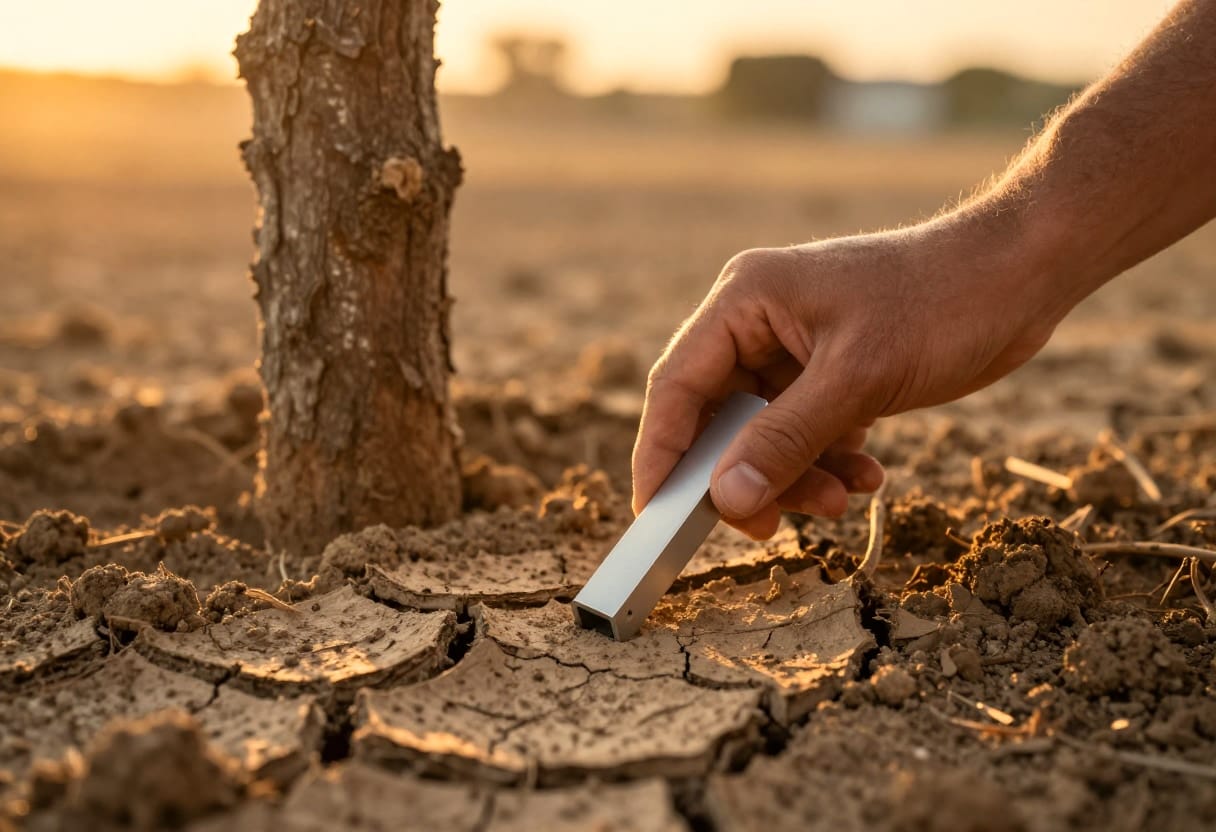
Robotics provides a more granular view. The new system involves a robot that moves through the orchard to measure the soil's electrical conductivity. This measurement indicates how easily electricity moves through the ground, which is influenced by moisture, salt, and clay content. By pairing these readings with data from existing fixed sensors, the system builds a statistical model to predict water content across the entire field.
Precision mapping offers three major benefits for your operations:
- Targeted hydration: Growers can identify specific dry trees and provide water only where it is needed, ensuring every drop counts.
- Improved plant health: Maintaining the "sweet spot" of moisture reduces tree stress and makes crops less vulnerable to pests and disease.
- Reduced pollution: By avoiding overwatering, you lower the risk of washing nutrients below the root zone and into the local environment.
This technology is built on years of research. The project began in 2019 through a collaboration between agricultural scientists and engineers at the Center for Agriculture, Food, and the Environment (CAFE). Elia Scudiero, an associate professor of precision agriculture, has spent 15 years studying soil conductivity to reach this milestone.
The next step involves moving to real-world farms. While the system has been successful in university research plots, it must now be adapted for rugged machines capable of operating in all weather conditions. As water costs rise and regulations on groundwater use tighten, these tools will be essential for anyone looking to produce the same amount of crop with significantly less water.
The ultimate goal is simple: "More crop per drop!" As the technology moves toward commercial adoption, it offers a clear path to securing food supplies while protecting our most precious natural resources. Read more: Unitree's robot app store is live — but the robots can't think yet.